
LEARNING TO LIVE IN HARMONY WHEN THE WORLD FEELS DIVIDED.
When we learn to live in harmony with one another, we create communities that reflect the world we hope to build.
ESTRELLA ALVAREZ TINCH
7/6/20263 min read
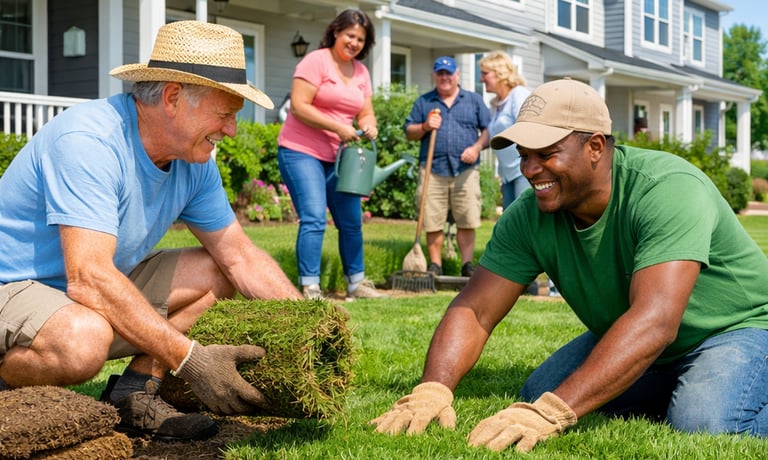
There are communities where people move through their days with a quiet understanding that they belong to one another. In these places, neighbors wave as they pass, children play freely, and disagreements are handled with patience rather than hostility. People honor the shared agreements of their neighborhood—whether it is an HOA or simply the unspoken covenant of mutual respect. They pick up after their pets, keep their yards tidy, and look out for the elderly couple down the street. When someone’s trash can blows over in a storm, another neighbor sets it upright without being asked. These small gestures create an atmosphere of safety, dignity, and trust. They are not grand acts, but they are the daily threads that weave harmony into the fabric of community life.
And then there are the other places—the ones where tension hangs in the air like humidity. A single angry neighbor can shift the entire emotional climate of a street. This is the person who refuses to follow community guidelines, who lashes out over minor inconveniences, who sees every interaction as a battle to be won rather than a relationship to be tended. Their anger becomes contagious. People begin to avoid one another. Doors close a little faster. Conversations become shorter. The sense of belonging that once held the community together begins to fray.
What makes the difference between these two communities is not wealth, location, or even the presence of rules. It is the willingness of individuals to practice emotional maturity—to pause before reacting, to consider the impact of their words, to choose compassion over defensiveness. Harmony is not accidental. It is cultivated through intention, humility, and the daily practice of seeing one another as human beings rather than obstacles.
When we cannot manage our own emotions, we become incapable of contributing to the collective good. A person who cannot regulate their anger cannot build trust. A person who refuses accountability cannot sustain relationships. A person who sees themselves as the center of every conflict cannot participate in the shared work of community. And if we cannot create harmony on our own street, how can we hope to effect change on a larger scale?
The Work of Love begins at home—within our own hearts, within our families, within the small circles where our choices ripple outward. If we want a more just, compassionate world, we must first learn to live with kindness in the spaces closest to us. We must practice patience with the neighbor who frustrates us, generosity with the one who is struggling, and courage with the one who needs to be held accountable. Love does not mean avoiding conflict; it means approaching conflict with the intention to heal rather than harm.
When we learn to live in harmony with one another, we create communities that reflect the world we hope to build. We teach our children that respect is not optional, that kindness is a strength, and that every person—regardless of background, belief, or temperament—deserves to be treated with dignity. We show them that love is not merely a feeling but a responsibility, a daily commitment to the well‑being of others.
The truth is simple: we cannot transform society if we cannot transform the way we show up for one another. Change on a larger scale begins with the smallest acts of grace. It begins with the courage to soften our tone, the humility to apologize, the wisdom to listen, and the willingness to see our neighbors not as adversaries but as fellow travelers in this shared human journey.
Harmony is possible. It is not naïve, nor is it out of reach. It is the natural result of people choosing love over fear, connection over division, and responsibility over reaction. And when we practice this work—quietly, consistently, faithfully—we become the very change we long to see in the world.